
So, you scheduled a LASIK consultation, excited about life without glasses, only to hear those disappointing words: “I’m sorry, but you’re not a good candidate.” Maybe your corneas are too thin, your prescription is too high, or you’re dealing with presbyopia after age 40. The frustration is real when the solution you’d hoped for isn’t available to you.
Here’s the good news. If you’re over 45 and experiencing age-related vision changes, being told you’re not a LASIK candidate might actually point you toward a better solution. Refractive lens exchange (RLE) can address vision problems that LASIK can’t fix, and it offers a crucial benefit that LASIK can’t.
Keep reading to learn how RLE works, why it might be more effective than LASIK for your situation, and what to expect if you choose this procedure.
Why Some People Aren’t Good LASIK Candidates

LASIK works by reshaping your cornea to help light focus properly on your retina. This procedure excels at correcting nearsightedness, farsightedness, and astigmatism, but the challenge is that LASIK can address only corneal shape-related problems.
After age 40, your eye’s natural lens may begin losing flexibility, a condition called presbyopia, or age-related farsightedness. This lens-based problem may cause you to hold your phone at arm’s length or struggle to read menus in dim lighting.
LASIK can’t fix presbyopia because it doesn’t involve changing your lens at all. Some people also have corneas that are too thin for safe laser reshaping, prescriptions that are too extreme for LASIK, or other eye conditions that preclude the procedure. In these cases, refractive lens exchange can offer an excellent alternative.
What Is Refractive Lens Exchange?
Refractive lens exchange replaces your eye’s natural lens with an advanced intraocular lens (IOL) designed to provide clear vision at multiple distances. The procedure is essentially the same as modern cataract surgery, except it’s performed before cataracts develop.

During RLE, your ophthalmologist makes a small incision in your eye and uses a probe to gently break up and remove your natural lens. Then they insert your chosen IOL through the same tiny opening. The lens unfolds inside your eye and settles into place without the need for stitches.
The entire procedure takes about 15 minutes per eye. You’ll receive numbing drops and mild IV relaxation medication, so you’ll be awake and comfortable throughout. Most patients at The Eye Center spend 2 to 4 hours at the facility in total for preparation, the procedure, and initial recovery.
Because RLE permanently replaces your natural lens with an artificial one, you’ll never develop cataracts in the future. Your new lens won’t cloud over or lose flexibility with age. This means one procedure addresses both your current vision problems and prevents a common age-related condition that would otherwise require surgery later in life.
Comparing RLE to LASIK
Understanding the difference between these two procedures helps explain why one might be better suited to your needs than the other:
What LASIK Can and Can’t Fix
LASIK reshapes your cornea to correct nearsightedness, farsightedness, and astigmatism. For many people under 40 with healthy eyes, this provides excellent results that can last for years. The procedure is quick, recovery is fast, and most patients see dramatic improvements in their vision.
However, LASIK doesn’t address presbyopia. If you have this procedure after age 40, you’ll likely still end up needing reading glasses for up-close tasks. Some people choose monovision LASIK, where one eye is corrected for distance and the other for near vision, but this approach doesn’t work well for everyone.
Overall, corneal reshaping might help temporarily, but your aging lens will continue changing. If you get LASIK after age 40, you could find yourself back in glasses within a few years, and you’ll eventually need cataract surgery anyway.
What RLE Offers Instead
RLE corrects both your refractive error and presbyopia in one procedure. The advanced lifestyle lenses used at The Eye Center provide a full range of vision, allowing most patients to see clearly at near, intermediate, and far distances with minimal dependence on glasses.
The results are permanent. Your prescription won’t change over time because the artificial lens remains stable. You won’t experience the gradual vision decline that comes with natural lens aging, and you’ll never need cataract surgery later in life.
For patients over 45, RLE often delivers better long-term outcomes than LASIK.
Who Makes a Good RLE Candidate?
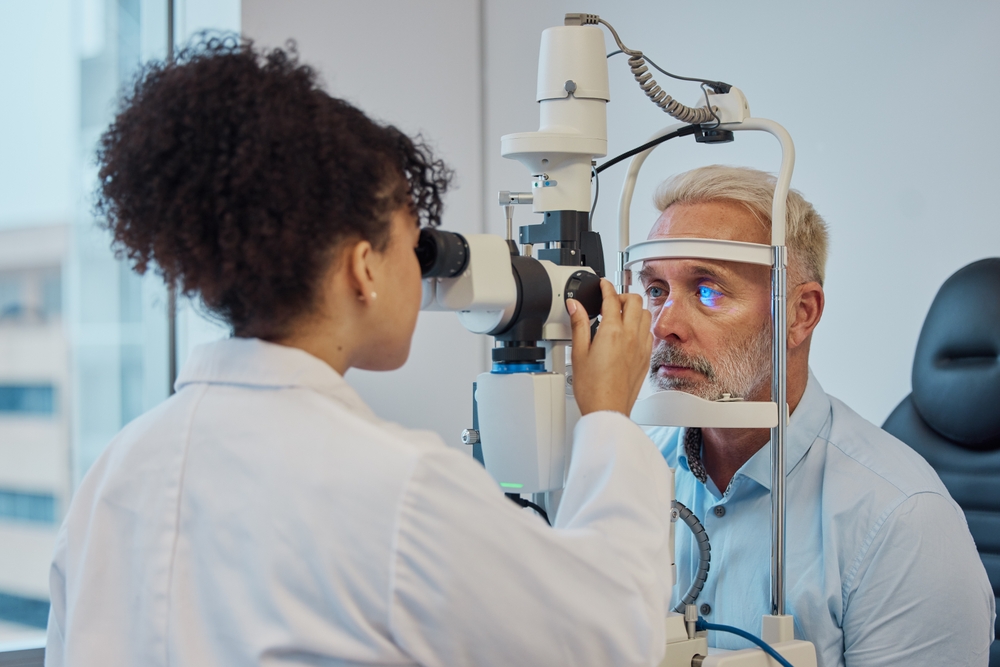
RLE is best suited for specific patients with specific vision needs. If you’re over 45 and haven’t developed cataracts yet, this procedure might be right for you. Most RLE candidates are dealing with presbyopia along with nearsightedness, farsightedness, or astigmatism.
You should have realistic expectations about the procedure and its outcomes. While most patients achieve excellent vision with little to no dependence on glasses, results can vary based on your individual eye characteristics and vision needs. Some patients may still need glasses for specific tasks, such as reading very small print or driving at night.
A comprehensive eye examination can determine whether RLE is appropriate for your situation. Your ophthalmologist will evaluate your corneal health, measure your prescription, assess your natural lens, and discuss your lifestyle needs. At The Eye Center, this evaluation includes detailed measurements to determine which advanced lifestyle meets your specific visual goals.
Moving Forward with Confidence
Learning you’re not a LASIK candidate can feel like a setback, but it can also lead to discovering a solution that better addresses your vision needs. RLE provides comprehensive correction for both distance vision and presbyopia, delivers permanent results that won’t regress over time, and eliminates your risk of needing cataract surgery in the future.
Ready to explore whether refractive lens exchange is right for you? Schedule a consultation at The Eye Center in Greenfield or Athol, MA, today to discuss your goals and determine the best path forward for your vision.