
You update your glasses, follow your eye doctor’s advice, and still feel like your vision is not quite right. Headlights look harsh at night, fine print takes a beat longer to come into focus, or the world seems faintly hazy in a way a new prescription does not fix.
A routine eye exam measures how well you see and what correction sharpens your vision. What it cannot always show is where a problem begins inside the eye. That answer often changes the right course of treatment.
Keep reading to learn how iTrace testing, one of the advanced diagnostic tools used at The Eye Center, gives your eye doctor a clearer picture of your vision and why that detail matters.
What Is iTrace Testing?

iTrace is a single diagnostic device that performs five separate measurements in one quick scan. It captures wavefront aberrometry, autorefraction, keratometry, pupillometry, and corneal topography, then combines the results into a complete profile of how your eyes focus light.
The technology works by projecting hundreds of individual light rays through the pupil and tracking exactly where each one lands on the retina. This ray tracing approach measures vision much closer to the way you actually experience it, rather than estimating from reflected light alone.
What sets iTrace apart is its ability to separate the visual function of your cornea from the internal optics of your eye. Most tests evaluate the eye as a whole. The Eye Center uses iTrace during comprehensive eye exams and pre-operative evaluations to understand each part of your visual system on its own.
The scan itself is fast and painless. You rest your chin on a support and look at a target while the device captures its measurements, usually in under a minute per eye. Just as useful, iTrace can turn its findings into images that show what your vision looks like, so your doctor can point to the screen and explain your results instead of relying on numbers and terminology alone.
How iTrace Sees What Other Tests Miss
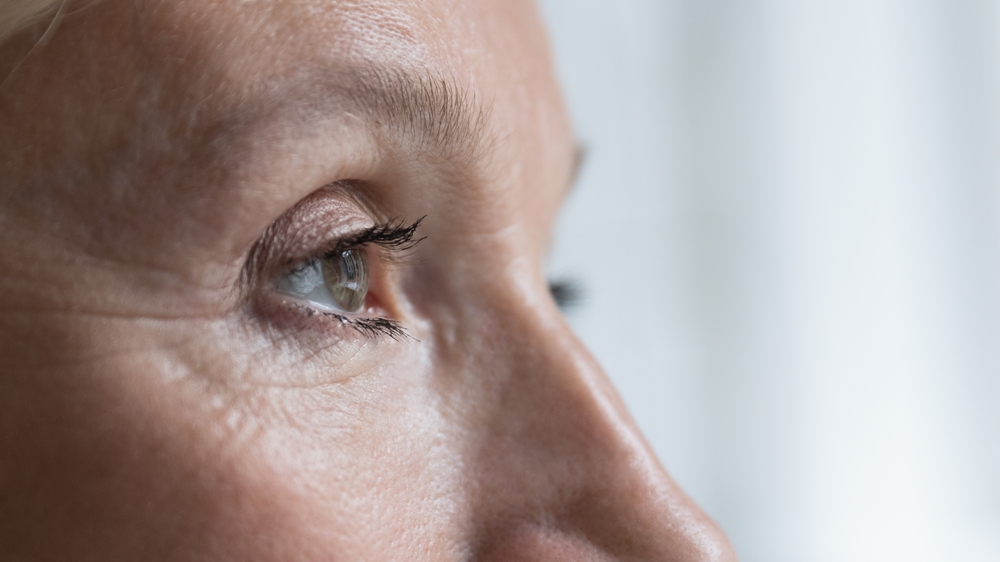
Two people can share the same glasses prescription and still see very differently. The reason often comes down to higher-order aberrations, the subtle optical irregularities that a standard refraction does not capture.
These aberrations are responsible for many of the visual complaints that ordinary tests struggle to explain. Blur that lingers, double vision, starbursts, glare, and halos around lights at night frequently trace back to them. For drivers, those symptoms can turn an everyday evening commute into a real strain.
iTrace measures these irregularities and shows whether they originate in the cornea or deeper in the eye. That distinction guides treatment. A problem rooted in the cornea calls for a different approach than one caused by changes in the lens, and identifying the source early helps your doctor recommend the option most likely to help.
Night vision is a good example of how this plays out. Your pupil widens in low light, which exposes more of the eye’s optical imperfections than you notice during the day. iTrace can analyze how your eyes perform in both bright and dim conditions, and in some cases that information points to a separate pair of glasses for nighttime driving or a treatment that addresses the underlying cause.
What Else Can iTrace Help With?
Outside of eye exams, the team at The Eye Center uses iTrace technology to help with:
Cataract Surgery
As the eye’s natural lens ages, it gradually loses clarity and starts to scatter incoming light. iTrace can measure that decline and assign a numerical grade to the quality of vision coming from your lens. This gives your eye doctor an objective way to track how a cataract is affecting your sight over time, rather than relying on description alone.
When the time comes for cataract surgery, the artificial lens that replaces your natural one shapes how you will see for years afterward. iTrace data helps your doctor match you with the intraocular lens best suited to your eyes and your daily life, including premium options that can reduce your dependence on glasses.
For patients with astigmatism, iTrace maps the cornea precisely enough to plan the placement of a toric lens, which corrects astigmatism while treating the cataract. The same scan can confirm after surgery that the lens is sitting exactly where it should, often without the need to dilate the eye.
Vision Correction
If you are considering laser vision correction, the detailed map it produces helps your doctor determine whether you are a good candidate for LASIK or another refractive procedure. It flags corneal irregularities that could affect your results before you commit to surgery.
Dry Eye

The test also examines the surface of your eye. A poor tear film scatters light before it ever reaches the retina, which means dry eye can blur vision in ways that mimic other problems. iTrace measures tear film quality, helping your eye doctor recognize when treating the ocular surface, rather than changing a prescription, is what will actually improve your comfort and clarity.
For patients in their 40s and 50s who notice their vision shifting, this combined view is especially useful. Instead of guessing which change is responsible, your doctor can point to the specific part of the eye that needs attention and explain what is happening in plain terms.
Is iTrace Testing Right for You?
iTrace gives your eye doctor information that no single conventional test can provide, and it does so in a matter of minutes without discomfort. Because it is newer technology, iTrace is often not covered by insurance, so your doctor will review any out-of-pocket cost with you and recommend the test only when the data will meaningfully shape your care.
Clear answers about your vision begin with a clear picture of your eyes. Want to understand exactly what is affecting your vision before making a treatment decision?
Schedule an appointment at The Eye Center in Greenfield or Athol, MA, today.